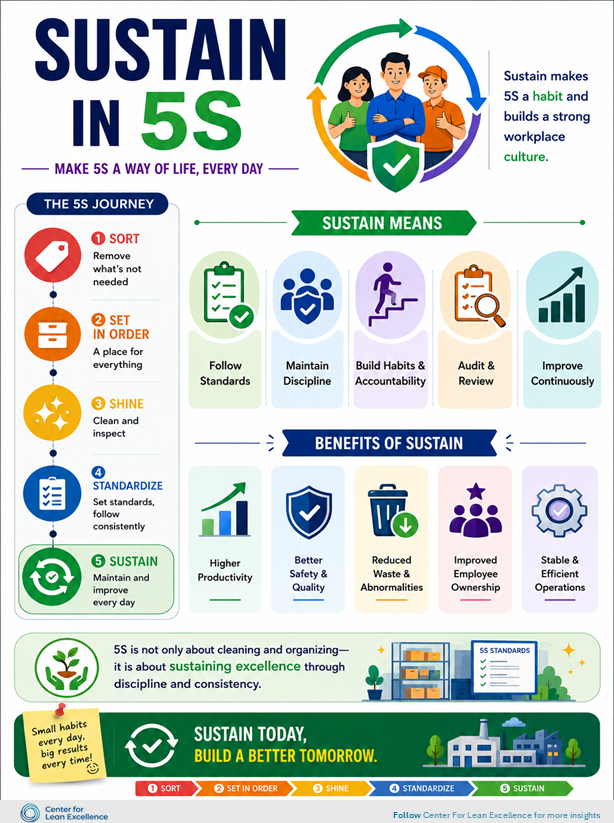
The success of any workplace improvement initiative depends not only on achieving results but also on maintaining them over time. In the 5S methodology, the fifth and final step, Sustain (Shitsuke), serves this critical purpose. Sustain is the discipline that ensures the gains achieved through Sort, Set in Order, Shine, and Standardize become a permanent part of the organization’s culture.
Many organizations begin their 5S journey with enthusiasm. Workplaces become cleaner, more organized, and more efficient. However, without a structured effort to sustain these improvements, teams often drift back to old habits. Over time, clutter returns, standards are ignored, and the benefits of 5S gradually disappear. Sustain is what prevents this regression and transforms workplace organization from a short-term initiative into a long-term way of working.
At its core, Sustain is about developing discipline. It is the commitment to follow established standards consistently, even when no one is watching. It encourages employees to take ownership of their work environment and maintain the improvements that have been achieved. Rather than relying on periodic clean-up campaigns or management intervention, Sustain creates a culture where workplace excellence becomes everyone’s responsibility.
One of the primary focus areas of Sustain is the consistent adherence to standards. Standards developed during the Standardize phase define the best known way of performing tasks and maintaining workplace conditions. Sustain ensures these standards are followed every day, creating stability and consistency across operations.
Maintaining workplace organization is another essential aspect of Sustain. Organized workstations, clearly identified storage locations, visual controls, and clean environments should not be temporary conditions. Through regular practice and discipline, employees develop habits that naturally support workplace order and efficiency. These habits reduce wasted time, improve productivity, and create a more professional working environment.
Regular audits and reviews also play a key role in sustaining 5S. Audits help verify that standards are being followed and identify areas where improvement is needed. Rather than being viewed as inspections, effective audits serve as learning opportunities that reinforce good practices and encourage continuous improvement. They provide valuable feedback and help maintain momentum long after the initial implementation phase.
Employee ownership is perhaps the most important factor in sustaining 5S. When employees feel responsible for their workplace, they are more likely to maintain standards and identify opportunities for improvement. Sustain encourages individuals and teams to take pride in their work areas and actively contribute to maintaining a safe, organized, and efficient environment.
Sustain is also closely connected to continuous improvement. A disciplined workplace provides a stable foundation for identifying problems, implementing solutions, and driving further enhancements. When standards are consistently maintained, abnormalities become easier to detect, enabling quicker corrective action and ongoing operational improvements.
Beyond workplace organization, Sustain helps build a strong organizational culture. It reinforces accountability, teamwork, and respect for standards. Employees learn that excellence is not achieved through occasional efforts but through consistent daily actions. Over time, these behaviours become ingrained in the organization’s culture, creating a workforce that is committed to quality, safety, and continuous improvement.
Organizations that successfully sustain their 5S efforts often experience lasting benefits, including improved productivity, enhanced safety, better quality, reduced waste, and stronger employee engagement. More importantly, they develop a culture that supports operational excellence and long-term business success.
Sustain is not simply the final step of 5S—it is the foundation that keeps all previous improvements alive. It ensures that workplace organization, cleanliness, and standardization do not fade over time but continue to deliver value every day.
As organizations strive for operational excellence, they must recognize that sustaining improvements requires commitment, discipline, and leadership at every level. By embedding these principles into daily work practices, organizations can create a culture where continuous improvement thrives.
Consistency is the key to sustaining excellence.
Join wi us : https://chat.whatsapp.com/Ihv7CwUYtNxGCUpSlHWUr5