
In every workplace, whether it is a factory floor, office, warehouse, or service environment, clutter slowly becomes part of daily operations. Unused tools, outdated materials, broken equipment, excess inventory, and unnecessary documents often occupy valuable space without anyone noticing their true impact. Over time, these items create confusion, reduce productivity, increase searching time, and hide operational problems.
This is where the Red Tag activity in 5S becomes a powerful starting point for workplace transformation.
Red Tagging is one of the simplest yet most effective Lean practices used to identify unnecessary items in a workplace. It is not just about cleaning or organizing; it is about exposing waste, improving visibility, and creating an environment that supports efficiency and continuous improvement.
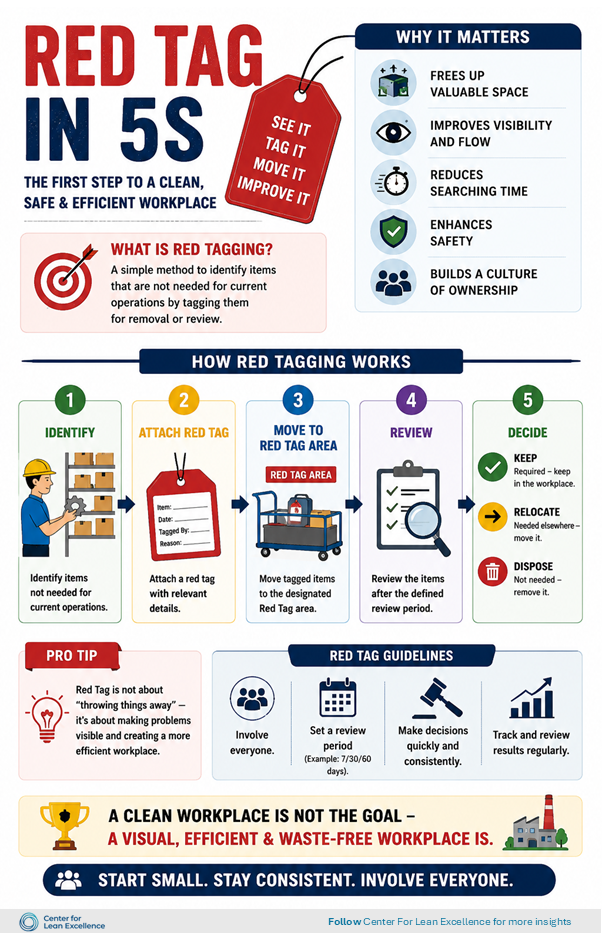
What is Red Tagging?
Red Tagging is a structured process used to identify items that are not required for current operations. These items are marked with a red tag containing relevant details such as the item name, department, date, and reason for tagging. Once tagged, the items are moved to a designated “Red Tag Area” for further review and decision-making.
The goal is simple: separate what is needed from what is unnecessary.
Organizations often struggle with keeping items “Just In Case,” which eventually leads to overcrowded workplaces and hidden inefficiencies. Red Tagging helps teams challenge these habits and make better decisions about workplace organization.
Why Red Tagging Matters
The benefits of Red Tagging go far beyond cleanliness. It directly impacts productivity, safety, and operational performance.
1. Frees Up Valuable Space
Unused items occupy valuable floor space that could otherwise support productive activities. By removing unnecessary materials, organizations can create more organized and functional work areas.
2. Improves Visibility and Flow
Clutter hides abnormalities and disrupts workflow. A cleaner and more organized workplace makes it easier to identify issues quickly and maintain smooth operations.
3. Reduces Searching Time
Employees often waste significant time searching for tools, materials, or documents. Red Tagging eliminates unnecessary items, allowing workers to access what they need faster and more efficiently.
4. Enhances Workplace Safety
Crowded workplaces increase the risk of accidents, blocked pathways, and unsafe conditions. Removing unnecessary items improves visibility and creates a safer working environment.
5. Builds a Culture of Ownership
Red Tag activities encourage employee involvement and accountability. When teams actively participate in workplace improvement, they develop a stronger sense of ownership and responsibility.
How Does Red Tagging Work?
A successful Red Tag campaign follows a simple step-by-step process:
Step 1 – Identify Unnecessary Items
Teams inspect the workplace and identify items that are not needed for current operations. These may include unused tools, obsolete materials, broken equipment, duplicate items, or excessive inventory.
Step 2 – Attach a Red Tag
Each unnecessary item receives a red tag containing important information such as:
- Item description
- Department or location
- Date identified
- Person responsible
- Reason for tagging
Step 3 – Move to the Red Tag Area
Tagged items are moved to a designated holding area for temporary storage and review. This prevents immediate disposal while allowing management to evaluate the item’s necessity.
Step 4 – Review and Decide
A review team decides whether the item should be:
- Kept
- Relocated
- Repaired
- Recycled
- Disposed of
This process ensures that only truly unnecessary items are removed.
Red Tagging is About Visibility, Not Disposal
One of the biggest misconceptions about Red Tagging is that it is simply about throwing things away. In reality, Red Tagging is about making workplace problems visible.
Excess inventory may indicate poor planning.
Unused equipment may reveal process changes.
Duplicate tools may expose lack of standardization.
By identifying unnecessary items, organizations uncover deeper operational issues that need attention.
Start Small, Stay Consistent
Successful workplace transformation does not happen overnight. Red Tagging works best when organizations start with small areas, involve employees at every level, and maintain consistency over time.
The real objective of 5S is not just to create a clean workplace. The true goal is to build a visual, efficient, safe, and waste-free environment that supports operational excellence.
Remember:
A clean workplace is not the destination – an organized, visible, and continuously improving workplace is the real goal.
Connect with us : https://lnkd.in/gRfc5mn8
https://lnkd.in/gTcMvuYp