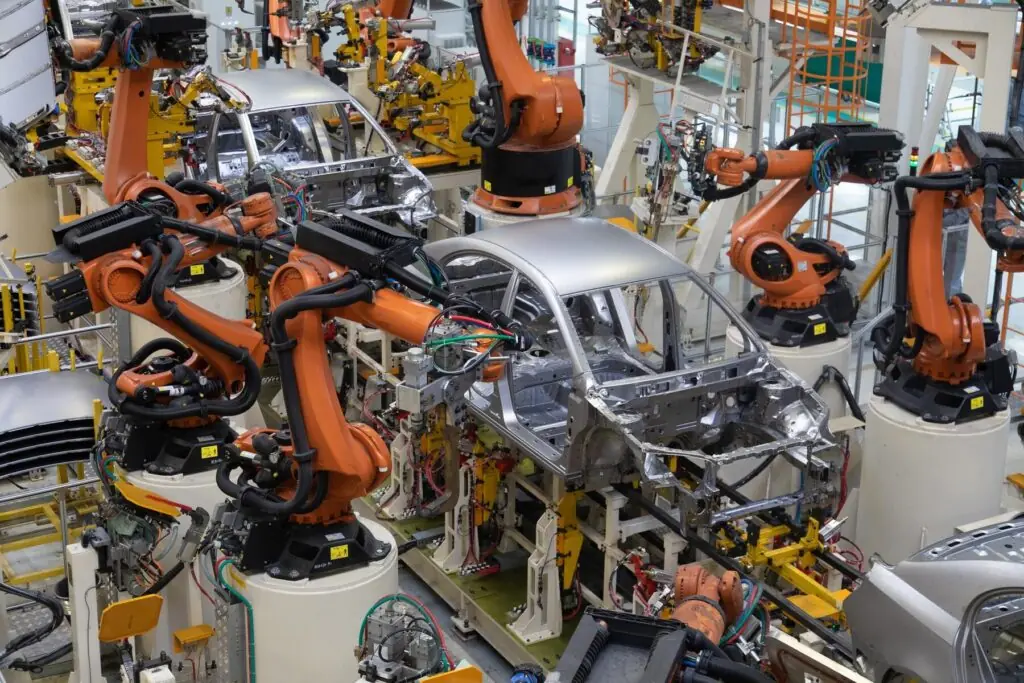
In every workplace, whether it is a manufacturing plant, office, warehouse, or service environment, inefficiencies often begin with clutter. Unused tools, unnecessary documents, excess inventory, and outdated materials slowly accumulate over time, creating confusion, consuming valuable space, and reducing productivity. Before organizations can improve efficiency, quality, or performance, they must first remove what does not belong. This is the true essence of Sort (Seiri) – the first pillar of the 5S methodology.
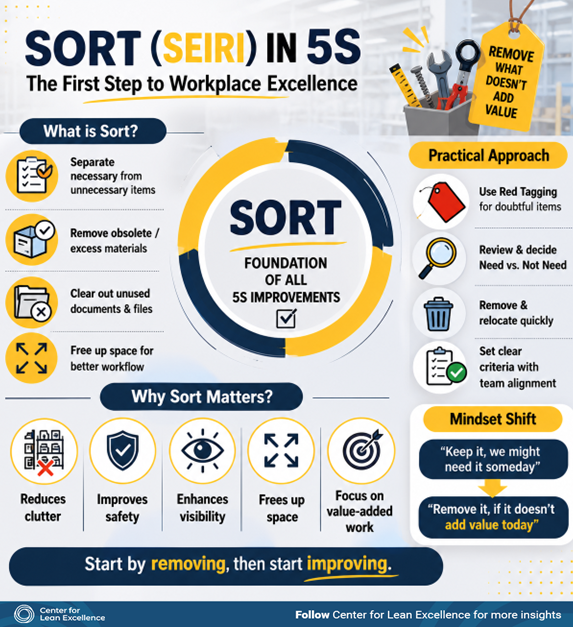
Sort is not simply about cleaning or organizing everything neatly. It is about making a clear distinction between what is necessary and what is unnecessary in the workplace. The goal is to retain only the items that support daily operations and remove everything else that creates waste or interrupts workflow.
In many organizations, people develop a habit of keeping items “just in case” they may be needed in the future. Over time, this mindset leads to overcrowded workstations, excessive storage areas, outdated files, duplicate tools, and unnecessary inventory. These conditions not only reduce operational efficiency but also increase the risk of errors, delays, and safety incidents.
Effective sorting begins with observation and questioning. Teams should evaluate every item in the workplace and ask,
- Is this item necessary for current operations?
- How frequently is it used?
- Does it add value to the process?
- Is it stored in the correct location?
- Can it be removed without affecting operations?
The sorting process typically involves:
- Identifying unused tools, equipment, and materials
- Removing obsolete or excess inventory
- Clearing unnecessary documents and outdated records
- Eliminating duplicate items
- Freeing up workspace for smoother operations and better flow
One of the most practical and widely used approaches in Sort is Red Tagging. When teams are unsure whether an item is required, a red tag is attached to the item for temporary review. If the item is not used within a defined period, it can then be relocated, recycled, or removed completely. This method helps organizations make objective decisions rather than emotional ones.
The impact of proper sorting goes far beyond appearance. A well-sorted workplace creates significant operational and cultural benefits. Employees can easily find tools and materials without wasting time searching. Work areas become safer due to reduced obstacles and unnecessary items. Visibility improves, making abnormalities easier to detect. Most importantly, teams can focus more effectively on activities that truly add value to customers and the business.
Sort also plays a critical role in Lean Manufacturing and Operational Excellence. Many hidden wastes in organizations — including excess motion, waiting, transportation, and inventory are directly connected to poor workplace organization. By removing unnecessary items, organizations create the foundation for smoother process flow and continuous improvement.
However, Sort should never be treated as a one-time cleaning campaign. Without discipline and regular review, clutter will gradually return. Sustainable improvement requires organizations to build a culture where employees continuously question unnecessary items and maintain workplace standards.
The real mindset shift behind Sort is moving from:
“Keep it, we might need it someday”
to
“Remove it, if it doesn’t add value today.”
This simple change in thinking can transform the workplace significantly. Organizations that successfully practice Sort create environments that are cleaner, safer, more productive, and more efficient.
Ultimately, Sort is the starting point of all 5S improvements. Before improving processes, organizations must first remove obstacles that prevent efficiency. When unnecessary items are eliminated, space is created not only physically, but also mentally allowing teams to focus on continuous improvement and operational excellence.
The journey toward workplace excellence always begins with one simple step:
Start by removing, then start improving.