
In many parts of the world, improvement is often associated with major changes on new goals, big plans, or significant transformation. However, in Japanese culture, improvement is approached differently. It is not treated as something occasional or extraordinary, but as something continuous and embedded into everyday life.
This philosophy, known as Kaizen, is built on the idea that small, consistent actions can lead to meaningful long-term progress. Rather than waiting for the right moment to improve, individuals focus on making small adjustments in their daily routines. Over time, these adjustments shape habits, and those habits shape outcomes.
Understanding Daily Kaizen in a life context helps us see that improvement is not about doing more—it is about doing things better, little by little, every day and here are the five ways in which they are implemented in a different approach.
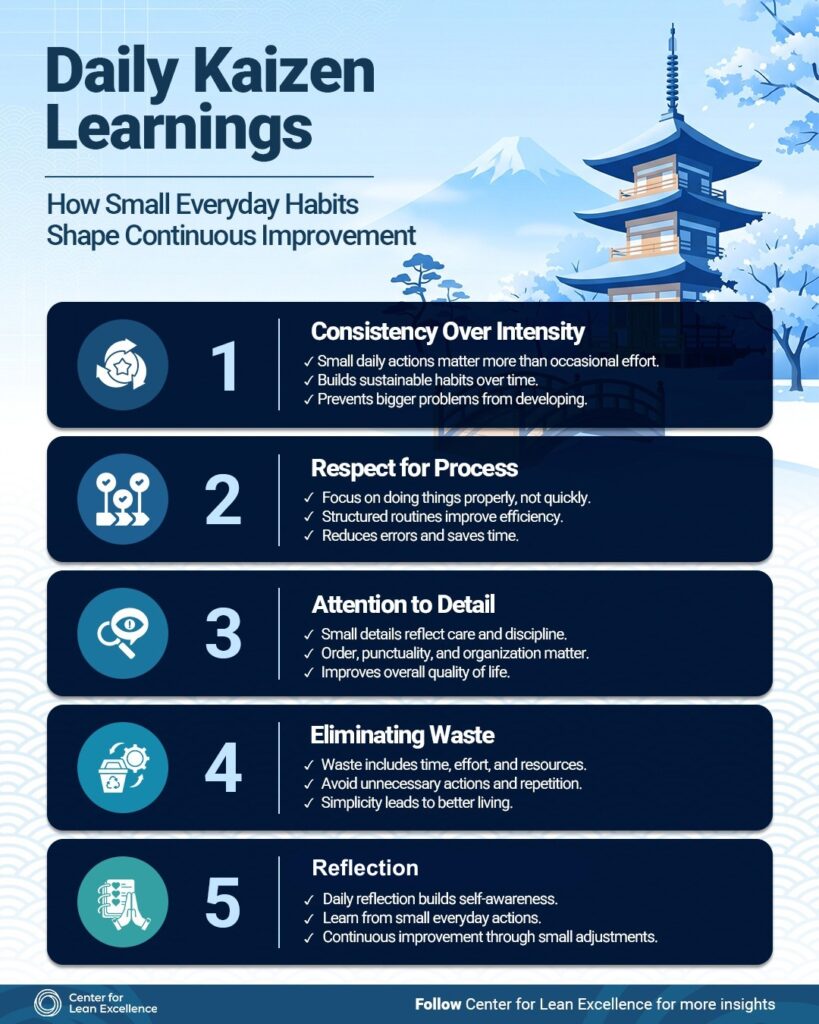
1. Consistency Over Intensity
One of the most important aspects of Daily Kaizen is consistency. In everyday life, small actions repeated regularly are valued more than occasional bursts of effort.
For example, maintaining a clean and organized home is not achieved through irregular deep cleaning, but through small daily habits like putting things back in place, cleaning as you go, and avoiding clutter. These actions take minimal effort individually, but together they prevent larger problems from building up.
This mindset reduces stress and creates a sense of control over daily life. It also makes improvement sustainable, as it becomes part of routine rather than a separate task.
2. Respect for Process
In Japanese daily life, even the simplest activities are carried out with attention to process. Whether it is preparing a meal, arranging personal items, or managing time, there is a natural flow and structure to how things are done.
This focus on process ensures that tasks are completed efficiently and with minimal waste. Instead of rushing to complete something, emphasis is placed on doing it properly.
Over time, this builds discipline and consistency. When people follow a structured approach in daily tasks, they reduce errors, save time, and improve overall quality of life.
3. Attention to Detail
Another key learning from Daily Kaizen is the importance of detail. Small things; often ignored in other contexts are given importance.
This can be seen in how spaces are arranged, how items are handled, and even how time is managed. Being punctual, keeping things orderly, and maintaining personal standards are all examples of this mindset.
Attention to detail reflects care and responsibility. It also creates a higher standard of living, where even simple tasks are done thoughtfully and with purpose.
4. Eliminating Waste
The idea of reducing waste is not limited to industries; it is deeply present in everyday life. Waste can take many forms, including time, resources, effort, and even energy.
In daily routines, this might involve:
- Avoiding unnecessary purchases
- Using resources efficiently
- Planning tasks to avoid repetition
By being mindful of waste, individuals naturally make better decisions. This leads to a simpler, more efficient lifestyle that focuses on value rather than excess.
Over time, reducing small daily waste creates significant improvements in both productivity and well-being.
5. Consistency Over Intensity
Daily Kaizen is incomplete without reflection. Improvement is not just about action; it is about learning from those actions.
In everyday life, this often happens informally. At the end of the day, individuals may think about what worked well and what could be done better. This reflection does not need to be structured or time-consuming.
What matters is the mindset of continuous learning. By making small adjustments based on daily experiences, individuals create a cycle of improvement that continues over time.
This habit builds self-awareness and helps people grow consistently without needing major changes.
Conclusion: From Daily Habits to a Culture of Improvement
Daily Kaizen reminds us that meaningful improvement does not come from large, one-time changes. Instead, it begins with simple awareness, grows through consistent action, and is sustained through discipline and reflection.
When small improvements are practiced regularly, they gradually reshape behaviors and outcomes. Over time, this process creates a way of living that is more organized, efficient, and mindful. What may seem like minor adjustments in the moment can lead to significant long-term impact when repeated daily.
Ultimately, continuous improvement is not something external to be applied occasionally; it becomes part of how individuals think, act, and make decisions in everyday life. By focusing on small, steady progress, anyone can build a foundation for lasting and meaningful change.